
RNFI Services Ltd has received in-principle authorisation from the Reserve Bank of India (RBI) to operate as a Payment Aggregator - Physical (PA-P). This approval allows the company to expand its financial infrastructure into physical, offline, and in-store payments, complementing its existing regulated financial services portfolio.

Fintech firm One97 Communications on Thursday said its subsidiary Paytm Payments Services Limited (PPSL), has received authorisation from the Reserve Bank of India to operate as a Payment Aggregator for physical (offline) payments and cross-border transactions.

PhonePe on Friday said it has got the final authorisation from the Reserve Bank of India (RBI) to operate as an online payment aggregator. With RBI authorisation in place, PhonePe will be able to expand its reach and tap into online merchants, with a particular focus on small and medium businesses (SMEs) across the country, according to a release.

The Reserve Bank of India has issued new master guidelines requiring non-bank payment system operators to report cyberattacks, system outages, and settlement delays within six hours. This directive aims to enhance cybersecurity, combat digital fraud, and ensure a more resilient digital payment ecosystem in India, with experts welcoming the proactive measures.
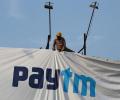
Paytm will focus on its core business of payments and cross-selling financial services as it works to achieve "profitability soon", said Vijay Shekhar Sharma, founder and chief executive officer of the fintech, on Thursday. "The past six months have taught us many lessons, giving us the opportunity to thoroughly examine our business processes, compliance, and the way we operate from the inside out.

Fino Payments Bank reported a net loss of Rs 21 crore for the second quarter ended September 2026, a significant drop from the Rs 15 crore profit in the previous year. This comes as the bank operates under an interim CEO following the arrest of its former MD & CEO, Rishi Gupta, on charges of GST violations linked to online money gaming.
The Reserve Bank of India (RBI) has issued a consolidated cybersecurity rulebook for all non-bank payment system operators (PSOs), including annual system audits and third-party ATM switch providers, to address vulnerabilities posed by artificial intelligence.

Nandan Nilekani, co-founder of Infosys, has urged for the expanded adoption of the Account Aggregator (AA) framework to facilitate formal credit access for self-employed individuals and gig workers. He highlighted its potential to enable cash-flow-based lending by leveraging diverse data streams, moving beyond traditional asset-based lending, and fostering a more inclusive digital financial infrastructure in India.

Fintech company Cashfree Payments India Private Limited has significantly reduced its consolidated net losses to Rs 118.5 crore in FY26 from Rs 154 crore in FY25. The firm also saw a substantial revenue growth of over 51 per cent, reaching Rs 967.4 crore. Co-founder & CEO Akash Sinha highlighted achieving EBITDA profitability in March 2026 and outlined plans for full-year profitability in FY27, driven by growth in SMB and cross-border payments.

IRCTC is expanding its payments arm, IRCTC Payments, to handle transactions across its ticketing platform and tap government clients, aiming to scale its annual payment processing to approximately 1 trillion.

National Investment and Infrastructure Fund Limited (NIIF) has appointed Gauravjit Singh as managing partner to lead its global capital formation efforts. Simultaneously, PB Fintech's payment aggregator platform, PB Pay, has gone live, offering consolidated payment acceptance for merchants. In a move to enhance trade efficiency, the Directorate General of Foreign Trade (DGFT) has introduced open API integration for Certificate of Origin, allowing exporters to streamline their application processes.

PayPal Payments Pvt Ltd (PayPal), the Indian subsidiary of PayPal Holdings Inc, has received in-principle approval from the Reserve Bank of India (RBI) to operate as a Payment Aggregatorross Borderxports (PA-CB-E). This marks a key milestone in PayPal's operations in India and its continued support for Indian small businesses, enabling secure cross-border payments to approximately 200 markets, the company said in a statement.
India's cybersecurity agency, Cert-In, has issued a high-alert advisory to banking and financial services institutions regarding an ongoing AI-assisted cyber campaign named "Crafty Falcon." This sophisticated threat actor uses publicly available AI tools to execute autonomous attacks at machine speed, targeting payment and disbursement APIs for unauthorised fund transfers. The advisory urges BFSI entities to maintain heightened vigilance, especially during low-monitoring windows, as attacks continue despite previous remediation efforts.

The Central Board of Indirect Taxes and Customs (CBIC) has enabled UPI, debit, and credit card payments for Customs duty on the ICEGATE portal, enhancing ease of doing business for importers and exporters.

Parliament was informed that UPI has onboarded 55.49 crore users by June 2026, with transactions reaching 24,162 crore in volume and Rs 314 lakh crore in value in FY 2025-26. The platform, operated by NPCI, is expanding internationally through NIPL, facilitating cross-border payments and assisting other nations in building similar systems. Significant efforts are also underway by the Government, RBI, and NPCI to enhance the security and transparency of UPI transactions, including risk-based limits, security frameworks, and public awareness campaigns against cyber-crime.

The Supreme Court has refused to grant an interim stay on the imposition of Merchant Discount Rate (MDR) on UPI person-to-merchant transactions exceeding Rs 2,000, which is set to take effect from October 15. The court has agreed to examine the challenge to this new fee and has issued notices to the Centre, RBI, and NPCI, seeking their responses within four weeks. A Public Interest Litigation (PIL) argues that the levy lacks statutory safeguards, transparency, and public consultation, and could adversely affect merchants and consumers.

75% of India's 60 million digital-payment merchants have never recorded a transaction above 2,000.

The Central Consumer Protection Authority (CCPA) has imposed a Rs 10 lakh penalty on ride-hailing platform Ola for soliciting additional payments from customers before journey completion. The CCPA deemed the pre-ride 'tip' or 'add-on' feature an unfair trade practice and a dark pattern, misleading consumers about faster ride allocation. The regulator has directed Ola to immediately discontinue this practice and ensure compliance with consumer protection guidelines. Similar actions are underway against other aggregators like Uber and Rapido.

Fintech platform Decentro has received final approval for a Payment Service Provider (PSP) licence from the IFSCA at GIFT City, enhancing its cross-border payment capabilities.
A report by IIT-Bombay professors recommends reducing the Merchant Discount Rate (MDR) on UPI transactions from 0.40 per cent to 0.08 per cent. It suggests that banks should fund the UPI ecosystem using their net interest margins from CASA deposits, rather than relying on MDR. The report also addresses transaction costs, credit card MDR, and ATM withdrawal allowances, aiming to ensure UPI's long-term sustainability and public trust by proposing remuneration only from large merchants.

The Enforcement Directorate conducted search and seizure operations at 13 locations across Tripura, West Bengal, and Maharashtra in connection with an alleged fake government tender racket. The probe targets a suspended IAS officer and co-conspirators involved in a money-laundering investigation, with victims defrauded of over Rs 44 crore.
ICICI Bank is seeking recoveries of at least 100 crore from fintech firms, alleging merchant misclassification of their business, a practice that has eroded the bank's interchange income. The dispute, lodged with global card network Visa, highlights growing discomfort among banks and intensified scrutiny from the Reserve Bank of India.

'The restrictive monetary limits under FAST-DS may prevent a significant number of taxpayers from regularising their undisclosed foreign assets.'

The Finance Ministry has dismissed allegations of US pressure influencing the 0.4% Merchant Discount Rate (MDR) on select UPI transactions. It clarified that NPCI guidelines prioritise RuPay credit cards on UPI and do not favour international cards. The ministry also asserted that the MDR, applicable to person-to-merchant transactions above Rs 2,000, is unlikely to increase cash transactions or cause inflation, with measures in place to prevent burdening consumers.

Overseas property is becoming a bigger part of Indian investors' wealth, but buyers must weigh currency risks, tax obligations, remittance limits and maintenance costs before investing.

The Finance Ministry has clarified that the 0.4 per cent Merchant Discount Rate (MDR) on UPI transactions above Rs 2,000, effective October 15, is not expected to increase cash transactions or cause inflation. The ministry also dismissed allegations of US pressure influencing the decision, asserting that the policy aims to promote RuPay credit cards within the UPI ecosystem, and a monitoring mechanism will ensure the MDR burden is not passed on to consumers.

India does not need to win the model race to win the AI era. It needs to be the country that cannot be switched off, can be trusted by its citizens, and is useful to the rest of the world, asserts Rajeev Srinivasan.

Finance Minister Nirmala Sitharaman clarified that the proposed Merchant Discount Rate (MDR) on select high-value UPI transactions is not a tax or cess, and its collections will not go to the government. She explained that MDR is a charge within the digital payments ecosystem, shared among participants to maintain infrastructure, and will not be passed on to consumers. The NPCI's new framework, effective October 15, applies a 0.4% MDR on person-to-merchant UPI transactions above Rs 2,000, with most transactions remaining free and small merchants exempt.

'Our focus would be to onboard top 100 merchants in top 10 different segments.'
The Enforcement Directorate (ED) has identified a Grenadian man based in Dubai as the 'beneficial owner' of a Delhi-based company involved in a large-scale betting, gaming, and cyber fraud-linked money-laundering operation in India.

Global payments solution major Mastercard has fully exited Indian fintech firm Pine Labs, selling its entire 4.31 per cent stake for Rs 933 crore through block deals on the BSE.

The NCP (SP) has demanded a complete rollback of the 0.4 per cent Merchant Discount Rate (MDR) on UPI transactions above Rs 2,000, effective October 15. The party termed the move a "direct assault" on small traders and shopkeepers, accusing the Modi government of "double standards" by burdening small merchants while large industrialists benefit from loan write-offs.

A new EY India report highlights how young professionals, women wealth creators, entrepreneurs, ESOP beneficiaries, and digitally active consumers from Tier-2 and Tier-3 cities are fundamentally changing India's wealth ecosystem. This shift is evidenced by increased participation of young and women investors, a rise in disciplined investing via SIPs, and the crucial role of Digital Public Infrastructure in democratizing access to long-term wealth creation. The report predicts over 100 million new investors by 2035.

India's markets regulator Sebi has launched 'Demat 2.0', a pilot project for tokenisation of corporate bonds, enabling atomic settlement through integration with RBI's wholesale CBDC. This new market infrastructure uses Distributed Ledger Technology (DLT) to make bond issuance, trading, and settlement faster and more efficient. India is the first country to issue corporate bonds natively on a distributed ledger with central bank digital currency settlement. Additionally, RBI Governor announced new UPI innovations: 'Tap & Pay' for faster POS transactions and MyUPI, an AI-powered customer support solution.
The Rajya Sabha has passed The Bankers' Books Evidence Bill, 2026, which aims to replace a British-era law and allow digital and virtual records to be admissible as evidence in courts. This legislation aligns with contemporary digital banking practices and extends a uniform evidential framework to various financial entities, including NBFCs and fintech companies. Finance Minister Nirmala Sitharaman highlighted the bill's role in strengthening public confidence and safeguarding customer privacy. The bill's passage, however, saw an Opposition walkout over unrelated issues.
Unified Payments Interface (UPI) transactions in India reached Rs 29.8 lakh crore in August, approaching record levels. Volume also hit a new high of 24.51 billion transactions, driven by festive activities like Raksha Bandhan. The digital payment system continues its rapid growth, expanding its global presence to 11 countries, with further growth anticipated during the upcoming festive season and new use cases like credit on UPI.

Jindal Supreme (India) Ltd's initial public offering, a manufacturer of plastic piping solutions, was subscribed an astounding 181.07 times on its final day, reflecting robust investor demand across all categories.
India's Unified Payments Interface (UPI) recorded an unprecedented 24.51 billion transactions valued at Rs 29.8 lakh crore in August, largely propelled by the Raksha Bandhan festival. This surge marks a 22% annual increase in volume and 20% in value, highlighting the expanding reach and depth of the UPI ecosystem. Experts anticipate further growth during the upcoming festive season, while UPI's international acceptance now spans 11 countries.

Six initial public offerings, including Rentomojo Ltd and Karamtara Engineering, were fully subscribed on their final day of bidding, with Rentomojo's IPO subscribed 72.88 times and Karamtara's 62.63 times, reflecting robust investor appetite in the primary market.

RBI Governor Sanjay Malhotra stated that the central bank consistently views fintechs as 'valuable partners' in shaping India's future financial system, crediting the sector with expanding financial inclusion, enhancing customer experience, and streamlining credit delivery, particularly for MSMEs.
